Basement renovation guide
How to Add a Legal Basement Apartment (SDU) in Ottawa
A feasibility-led walkthrough of adding a legal secondary dwelling unit in Ottawa, lot eligibility, ceiling height, fire separation, egress, entrance, and registration.
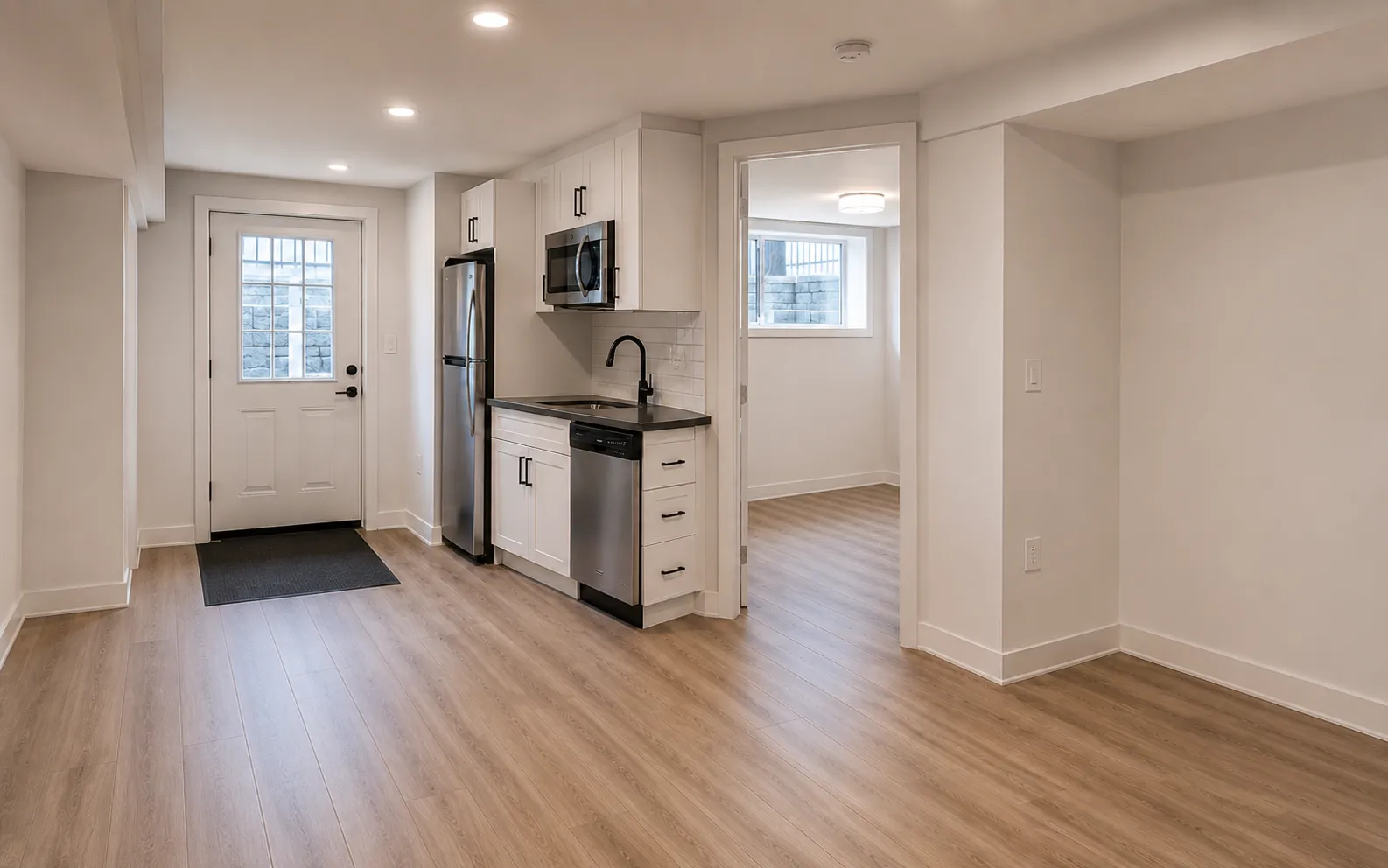
Adding a legal secondary dwelling unit (SDU) in your Ottawa basement is one of the best moves an owner can make in a tight rental market, but only if it’s done legally. Here’s how feasibility actually works, before you spend a dollar.
Can your lot legally take a suite?
Start with the lot. Most Ottawa properties can host a secondary dwelling unit, but the only way to be sure is to check yours against the rules for a suite, not a generic checklist. A feasibility assessment answers this first, so you never design a suite your lot can’t support.
The assessment looks at the things that actually decide yes or no: ceiling height, a route for a compliant entrance, where fire separation and egress can go, and how heating and ventilation will be split from the main house. Getting a straight answer before you spend on design is the whole point, it’s cheaper to learn your basement needs underpinning now than after you’ve drawn a suite around a ceiling that’s too low.
Ceiling height and what to do if it’s short
Ceiling height is the most common blocker, especially in older homes. If your basement is short of the required height, the fix is underpinning or floor-lowering to gain it, real work, but it turns an impossible basement into a legal one. Measure before you plan.
This is exactly why so many suites in older Nepean and village-core homes hinge on a structural step first. Underpinning deepens the footings to win headroom while keeping full floor width; bench footing is a faster, cheaper alternative that gives up a strip of floor along the walls. Either way, the height question is settled by measurement and an engineer, not optimism.
Fire separation and egress requirements
A legal suite needs proper fire separation between the unit and the rest of the house, plus a compliant egress window so anyone sleeping there can get out in an emergency. These two items are non-negotiable, and they’re what make a suite genuinely safe and approvable.
Fire separation is a rated assembly, typically fire-rated drywall and proper sealing, between the suite and the rest of the home, paired with interconnected smoke and CO alarms. The egress window must give a clear, climb-through opening, and if it’s below grade it needs a window well sized to climb out of. These aren’t finishes you can value-engineer away; they’re the life-safety core the City inspects for.
The separate-entrance question
A separate or private entrance is usually what makes the suite both legal and rentable. If your home doesn’t have one, a walkout or walk-up areaway can add it, often the single step that unlocks the whole project.
On a sloped lot a walkout can open the basement at grade; on a flat lot a walk-up areaway excavates an exterior stairwell down to a new door. Both are structural, permitted work with proper drainage built in so the new entrance never pools water. For a lot of Ottawa homes, adding the entrance is the difference between a basement you can legally rent and one you can’t.
Permit, inspection, and registration path
Finally, the paperwork: permit drawings, City submission, staged inspections, and registering the unit. We handle this whole path for you, so you finish with a suite that passes inspection, that your insurer will cover, and that you can rent with confidence.
Registration is what makes the unit official with the City, and the inspection record is what makes it insurable and saleable. The end state is a suite you can advertise honestly, insure properly, and count on at resale, not an off-the-books arrangement that becomes a liability the day something goes wrong.