Basement renovation guide
What to Do After a Basement Flood in Ottawa
Calm, step-by-step guidance for the first hours after an Ottawa basement flood, safety, insurance, the City’s compassionate grant, and the full dry-to-rebuild path.
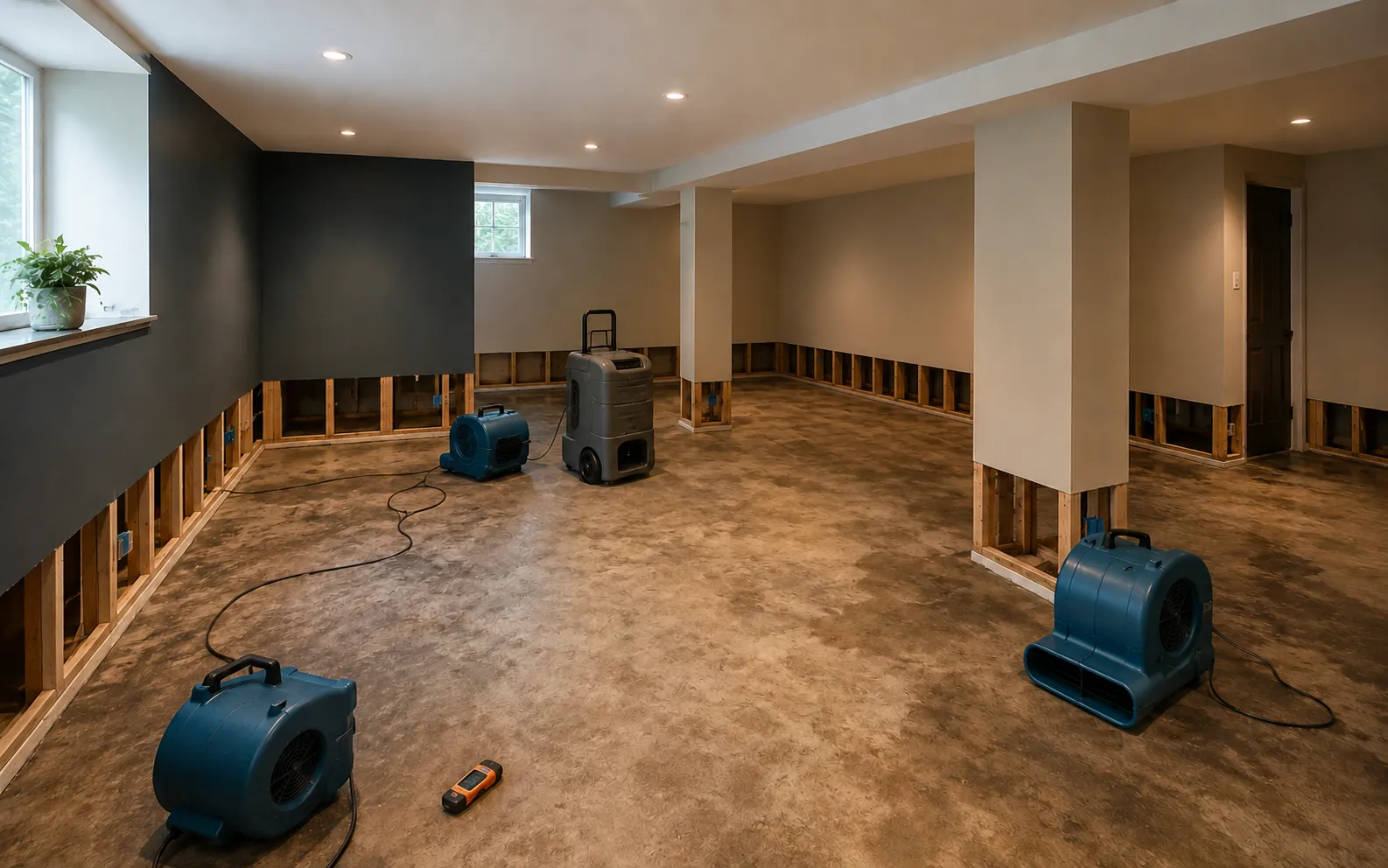
A flooded basement is stressful, but the first hours matter. Here’s a calm, step-by-step plan, what to do right now, how to protect your insurance claim, and how to make sure it never happens again.
First 60 minutes: safety first
First 60 minutes, safety first: if water is near outlets, the panel, or a furnace, stay out and shut off power to the basement only if you can do it safely and dry, otherwise call an electrician or your utility. Don’t wade into standing water of unknown depth or contamination. People before property.
Treat sewer-backup water as contaminated and keep kids and pets away from it entirely. If the furnace or hot-water tank was submerged, don’t run them until a technician checks them. Once you’re sure it’s safe, getting professional extraction moving quickly is the single biggest thing you can do to limit damage, the longer water sits, the more it wicks into materials.
Document everything for insurance
Document everything before you move or throw anything out: photos and video of the water level, the damage, and affected belongings. This record is what your insurance claim is built on, so capture it thoroughly while it’s fresh.
Shoot wide shots that show the water line on the walls, then close-ups of damaged items, and keep receipts for anything you buy during the emergency (a pump, a wet-vac, fans). If you must discard soaked, contaminated items for health reasons, photograph them first. A thorough record is what turns a contested claim into a paid one.
Calling your insurer: what to say
Call your insurer early and describe the cause plainly, sewer backup, overland flooding, or sump failure are treated differently. Ask what’s covered, what your deductible is, and whether they have a preferred process. Write down names and reference numbers.
These causes are separate coverages: sewer backup and overland water often require specific endorsements, and sump-pump failure may be its own rider. Be accurate about what happened, guessing the cause can complicate the claim. Ask whether they’ll cover the prevention upgrade as part of the rebuild, and note your adjuster’s name and claim number for every call.
Ottawa’s flood compassionate grant
Look into the City of Ottawa’s flood relief and protective-plumbing rebate programs. After major storm events the City has offered assistance, and rebates toward backwater valves and sumps lower your cost to prevent the next flood.
The protective-plumbing rebate is the one to know about: it offsets the cost of a backwater valve and sump upgrades, exactly the measures that stop the next flood, so pairing prevention with your rebuild lowers your net cost. We’ll point you to what’s currently available and which of your repairs qualify, so you don’t leave money on the table.
Drying properly vs. surface drying
Insist on proper drying, not just surface mopping. Water wicks into framing, insulation, and behind drywall; if it’s only dried on the surface, mold follows within a day or two. Real recovery means extraction, structural drying, and moisture testing.
Proper drying means removing soaked insulation and the bottom of the drywall, running commercial air movers and dehumidifiers, and confirming with a moisture meter that the framing is genuinely dry before anything is closed back up. Skipping this is how a basement looks fine for a month and then smells of mold, and how a flood becomes a health problem on top of a property one.
Rebuilding so it can’t happen again
Then rebuild so it can’t recur. Pair the restoration with the actual fix, a backwater valve, a sump with backup, drainage repair, or waterproofing, so you’re not redoing this next spring. That’s the difference between cleanup and a real solution.
Match the fix to the cause: a backwater valve for sewer backup, a sump with battery backup for groundwater, repaired weeping tile or grading for surface water, and interior or exterior waterproofing where the foundation is the path. Building in more than one line of defence means a single failure, a power cut, a clogged line, doesn’t put you back underwater. Cleanup gets you dry today; redundancy keeps you dry.