Basement renovation guide
Do I Need a Permit to Finish My Basement in Ottawa?
Plain-code answers on Ottawa basement permits, when you need one, what the City requires, and what unpermitted work costs you at resale and insurance.
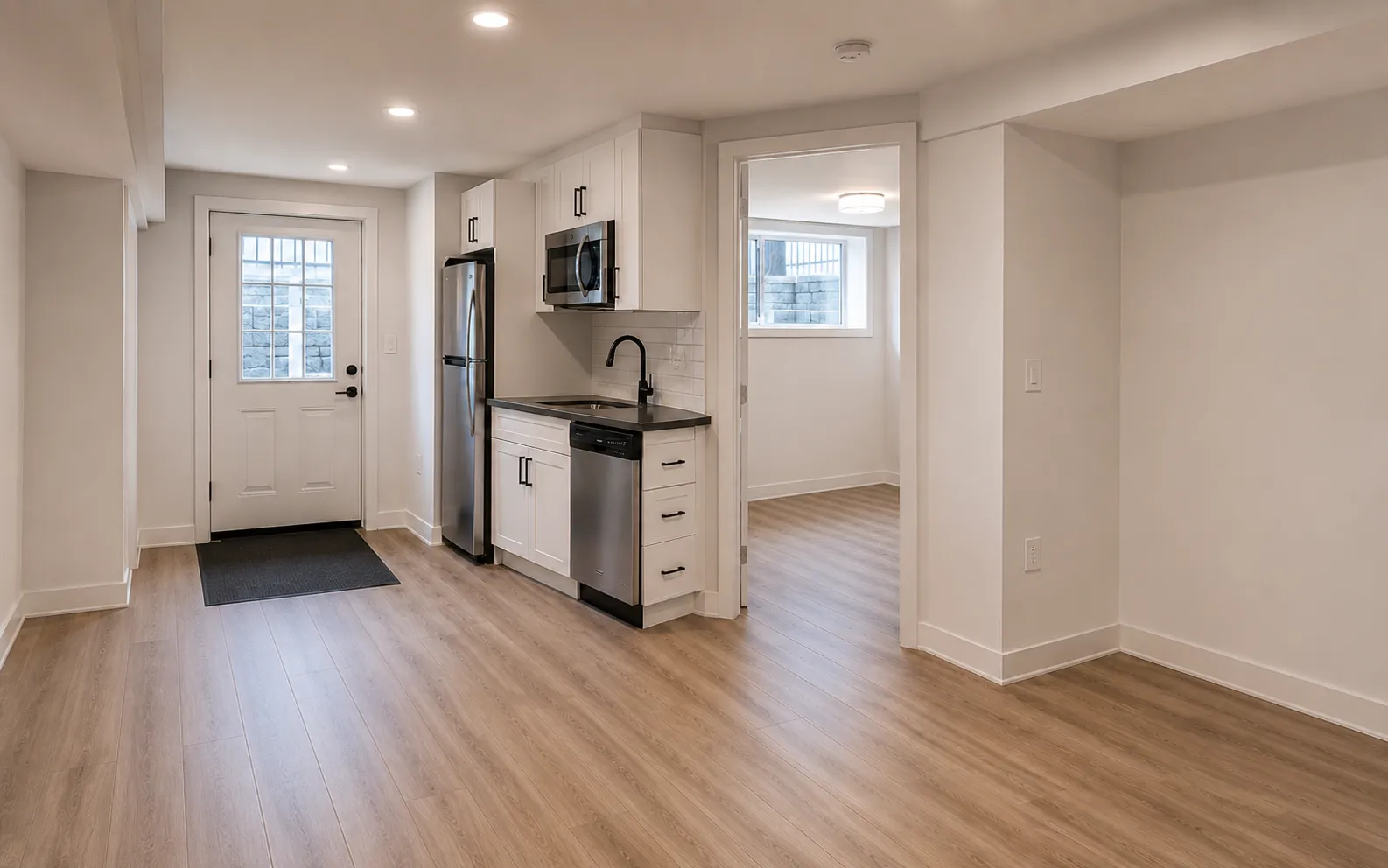
Permits sound like red tape, but in a basement they’re really about safety and protecting your investment. Here’s when you actually need one in Ottawa, in plain language.
When a permit is required in Ottawa
You generally need a City of Ottawa building permit once you do more than cosmetic work, adding a bedroom, a bathroom, a secondary suite, or making electrical, plumbing, or structural changes. Simply painting or recarpeting an already-finished space usually doesn’t. When in doubt, the safe assumption for a real finish is that a permit is required.
The trigger is structure and systems, not size. Framing new walls, running new circuits, adding plumbing, cutting the foundation for an egress window, or creating a separate dwelling unit all require a permit; swapping flooring or repainting an existing legal room does not. Because almost every real finish touches at least one of those, plan for a permit rather than hoping you’ll squeak under the line.
What the permit drawings include
The permit drawings show the City what you’re building: room layout, egress, fire separation (for a suite), and how plumbing and electrical will be done to code. Preparing them is normal and we handle it for you, it’s not a hurdle, it’s the plan everyone builds from.
Good drawings also save you money during the build, because the trades work from one clear plan instead of improvising. They’re where decisions like where the bathroom drain ties in, how the egress well is sized, and where the smoke and CO alarms go get settled on paper, long before anyone is standing in your basement with a saw.
Inspections and what they check
Inspections happen at set stages, framing, electrical, plumbing, insulation, to confirm the work is safe before it’s closed up in the walls. That’s the part that actually protects you: it means the hidden work was done right.
Each inspection is a checkpoint you’d want anyway. The framing and electrical inspections happen before insulation and drywall go up, so a problem is caught while it’s still cheap to fix, not discovered years later behind a finished wall. The inspector’s sign-off is independent proof that the parts you can’t see meet code.
The resale and insurance cost of skipping it
Skipping permits saves a little now and costs a lot later. Unpermitted basement work can stall or sink a sale, get flagged by a home inspector, and give your insurer a reason to deny a claim after a fire or flood. It’s the most expensive way to save money.
The bill usually arrives at the worst time. A buyer’s lawyer or home inspector spots undocumented work and the deal gets repriced or paused; or there’s a fire or flood and the insurer asks whether the work was permitted. Bringing unpermitted work into compliance after the fact, sometimes opening finished walls for inspection, costs far more than pulling the permit would have.
How we handle permits for you
The important thing is to identify permit and inspection requirements before the quote is finalized, so the plan is realistic and you are not surprised later.
That means the submission path, inspection timing, drawings, and code items should be accounted for before work begins. You want a paper trail that matches the actual project, not a finished basement with missing documentation.