Basement renovation guide
Interior vs Exterior Basement Waterproofing in Ottawa
Authoritative comparison of interior and exterior waterproofing and damp proofing for Ottawa homes, when each applies, cost, and the never-again approach.
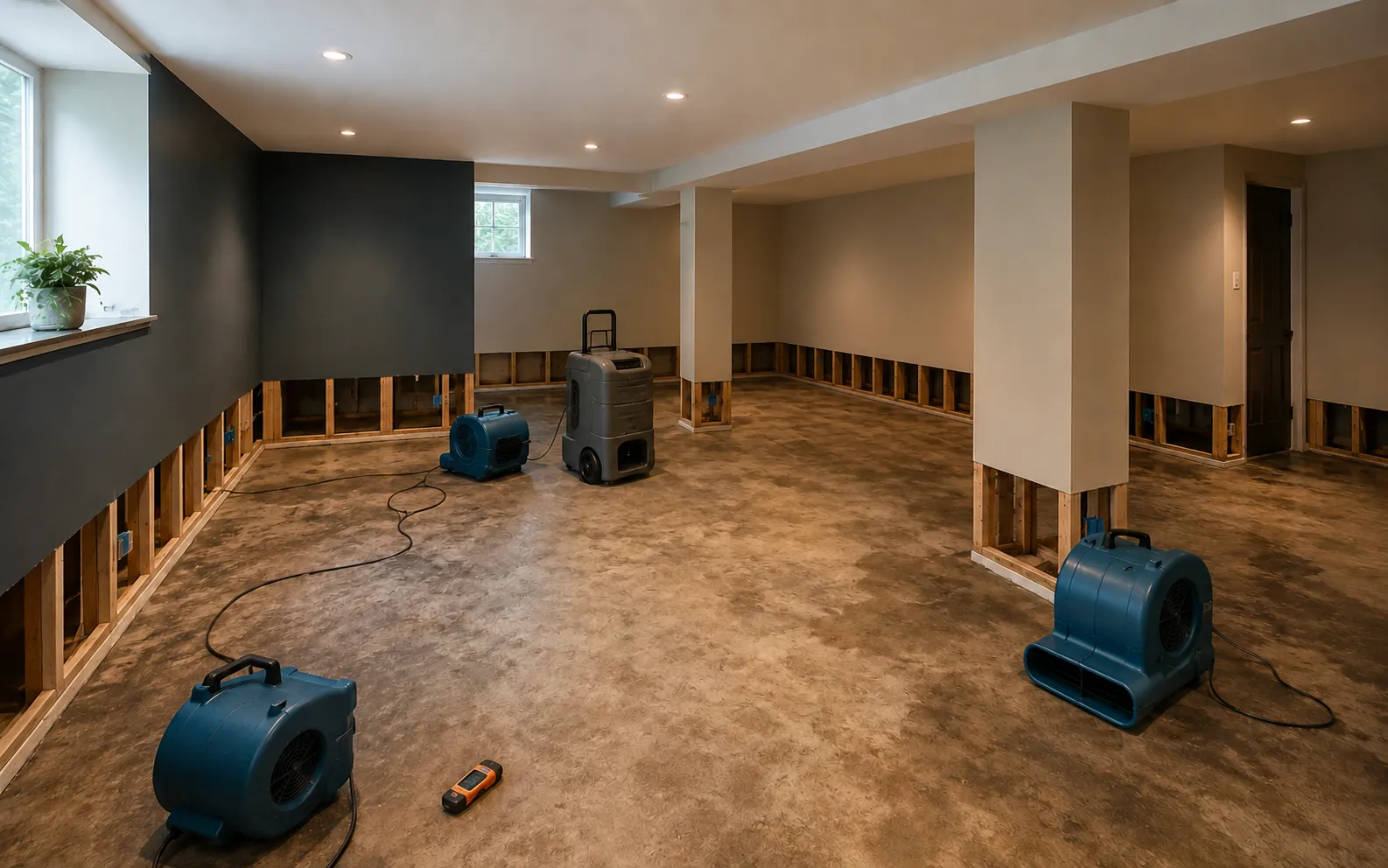
When you’re deciding how to keep a basement dry for good, the choice usually comes down to interior versus exterior waterproofing. Here’s what each actually does, and when each is the right call.
What exterior waterproofing does
Exterior waterproofing excavates down to the foundation and seals it from the outside, often with a membrane and improved drainage. It’s the most complete defense because it stops water before it reaches the wall, the right choice for persistent foundation leaks, though it costs more because of the digging.
Because it addresses water on the outside of the wall, it also relieves the hydrostatic pressure that drives leaks and can worsen cracks over time. The trade-off is disruption: it means excavating around the foundation, working around decks, landscaping, and utilities. When a foundation is actively leaking under pressure, though, it’s the fix that treats the cause rather than managing the symptom.
What interior waterproofing does
Interior waterproofing manages water that does get in, channeling it through an interior drain to a sump that pumps it away. It’s less invasive and usually better value, and it’s very effective when the issue is groundwater rather than a failing exterior surface.
A typical interior system installs a drainage channel along the footing inside the basement, tied to a sump pit and pump that discharges away from the house. Nothing outside gets dug up, so it’s faster and cheaper, and it pairs naturally with a finished basement. It’s the common-sense choice when the water is coming up rather than driving in through the wall.
Damp proofing vs waterproofing
Damp proofing is a different, lighter thing: it resists humidity and minor moisture, not active water under pressure. Waterproofing guides often price damp proofing lower for that reason, but don’t rely on it where you have actual water intrusion.
Damp proofing is the coating you’ll often find on a foundation from when the house was built, fine for resisting soil moisture, but not designed to hold back water under pressure. If you have a wet floor after every heavy rain, damp proofing alone won’t solve it. Knowing the difference keeps you from buying the lighter solution for a heavier problem.
When each method is the right call
Choosing between them starts with finding the source. A foundation crack under hydrostatic pressure, poor grading, a failed exterior membrane, and a high water table each point to a different fix. The right method follows the diagnosis, not a sales preference.
Diagnosis is where an honest contractor earns trust. Where does the water appear, when, and after what kind of weather? A crack that weeps after rain, a floor-wall joint that seeps in spring, and a window well that overflows are three different problems with three different fixes. We trace the source first, then recommend the method that solves it, not the most expensive option on the menu.
Backwater valves, sumps, and weeping tile
Backwater valves (for sewer backup), sump pumps with battery backup (for groundwater), and intact weeping tile all play a part. Most dry basements use a combination rather than a single magic fix.
These components each cover a different failure mode: the backwater valve stops the city sewer from pushing water back into your home, the sump handles groundwater, and clear weeping tile carries water away from the footing. A battery backup on the sump matters in Ottawa because storms that cause flooding often knock out power at the same moment you need the pump most.
The redundancy that stops recurrence
The goal is redundancy: more than one line of defense, so a single failure, a power outage, a clogged line, doesn’t put you back underwater. That layered approach is what turns “it leaked again” into “never again.”
Redundancy is just risk management applied to your basement: assume any one defence can fail, and make sure another catches the water when it does. A sump plus a backup pump, a backwater valve plus good grading, interior drainage plus a fixed crack. Layered properly, the system doesn’t depend on everything going right, which is exactly what lets you stop worrying every time the forecast turns.