Basement renovation guide
Is Underpinning Worth It? Ceiling Height for a Legal Suite in Ottawa
Calm, engineering-led look at basement underpinning in Ottawa, when it’s worth it, the ceiling-height gain that unlocks a legal suite, and how to avoid surprises.
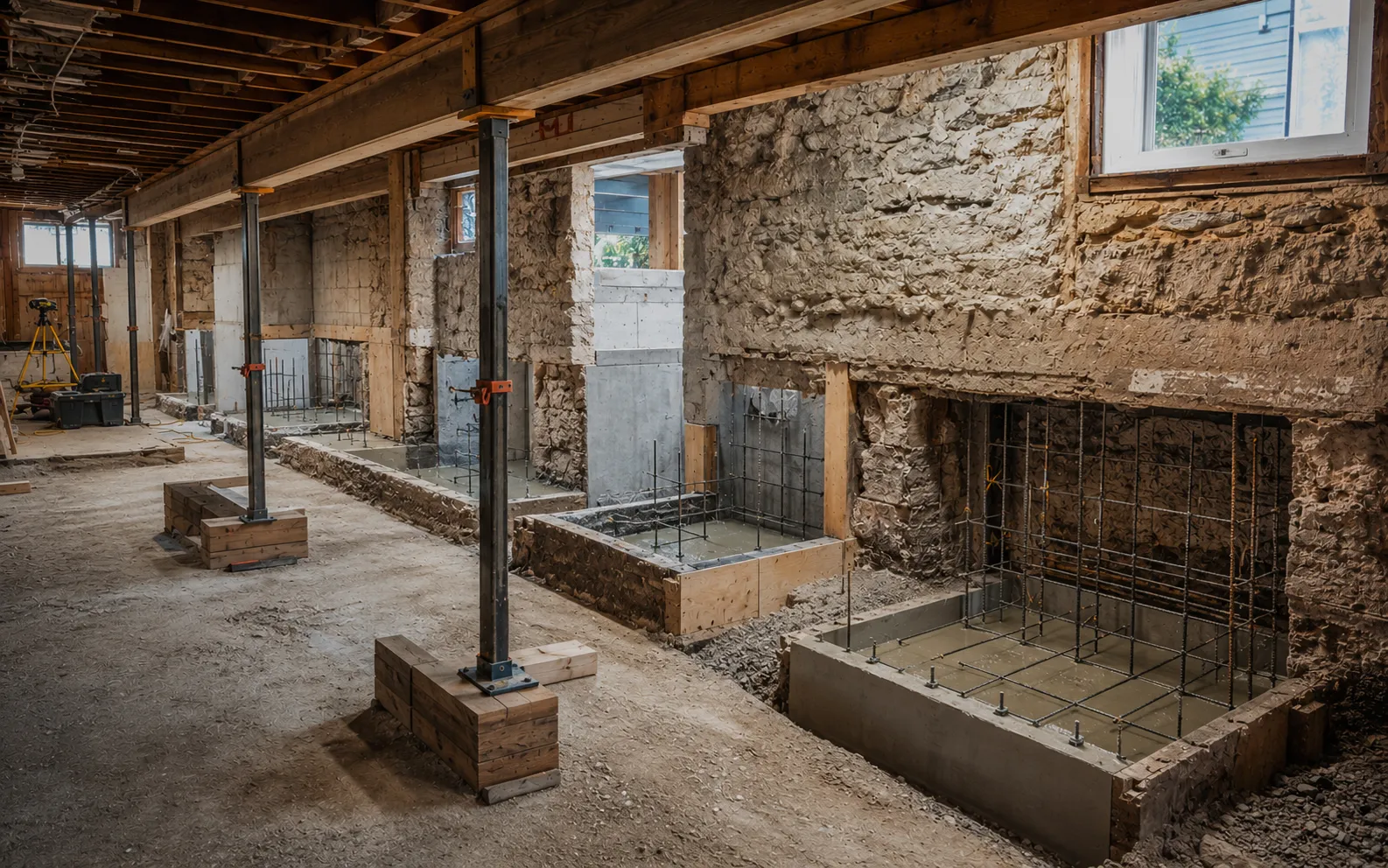
Underpinning is the big, slightly scary word that often stands between an older Ottawa basement and a legal suite. Here’s a calm look at when it’s worth it, and how to do it without surprises.
When ceiling height blocks a legal suite
The usual reason to underpin is ceiling height. A legal suite needs adequate finished height, and many older Ottawa homes, common in Nepean and the village cores, fall just short. If height is the only thing blocking your suite, underpinning is what unlocks it.
Once you account for the finished floor and any ceiling framing, a basement that measures fine bare can come up short legally. Homes built in the 1960s–80s across established Nepean pockets and Manotick’s old core are the classic cases. When everything else, the lot, the entrance, the layout, supports a suite and only the height is missing, underpinning is the one step that turns no into yes.
Bench footing vs. underpinning
There are two approaches. Underpinning extends the existing footings deeper so you keep full floor width; bench footing builds an interior bench along the walls, often faster and cheaper, but it gives up a strip of floor. The right one depends on your foundation and how much floor area the suite needs.
Underpinning is the choice when you need every square foot of width, it lowers the floor while preserving the full footprint, at a higher cost. Bench footing leaves the footings alone and builds a concrete ledge inside the perimeter; it’s quicker and less expensive but eats a band of floor along each wall. We weigh your foundation type, how much usable area the suite needs, and the budget to recommend one with the reasons spelled out.
The engineered, permitted process
Either way, it’s engineered work: a structural engineer designs it for your specific foundation, the City permits it, and the excavation is done in small, sequenced sections so the house is always supported. That process is exactly what makes it safe.
The house is never left unsupported. The work proceeds in small alternating sections, dig, pour, cure, move to the next, so the foundation always has solid bearing while one segment is being deepened. That methodical, engineer-designed sequence is the whole reason underpinning is routine structural work rather than the gamble people picture.
How much height you can gain
How much height you gain depends on your current foundation depth and soil, and a structural assessment tells you precisely before you commit. You’re not guessing, you get a number first.
The assessment reads your existing footing depth, soil conditions, and water table to determine how far down you can safely go, and therefore the finished height you’ll end up with. You learn whether you’ll clear the legal-suite threshold before any commitment, so the decision is made on a real number, not a hope.
What it costs and what prevents surprises
Underpinning is high-ticket, and honest pricing requires seeing the foundation, so it’s quoted after a structural review rather than over the phone. What prevents surprises is that engineering and the staged inspections: when the work is designed before anyone digs, the budget you approve is the one that holds.
The money-pit stories almost always come from jobs that skipped the design step and discovered the real scope mid-dig. Pricing after the structural review flips that: the engineering defines the work, the permit locks it in, and the staged inspections confirm each section. Because the scope is known before excavation starts, the number you approve is the number that stands.
Tying it to your suite build
Tie it to the suite plan from the start. Underpinning is rarely the goal on its own, it’s the enabling step. Sequenced correctly with the suite build, the height work and the finished unit come together as one coordinated project.
Planning them together avoids paying twice and lets the trades coordinate: new plumbing, drainage, and any radon piping can be set into the lowered slab while it’s open, and the finished suite is built on top without rework. Treated as one project rather than two, the structural step disappears into the result, a legal, finished suite, not a basement that was dug up once and finished later.