Basement renovation guide
Accessible & Aging-in-Place Basement Bathroom Design in Ottawa
Warm, dignity-led guidance on accessible basement bathrooms for aging parents, curbless showers, grab bars, no-step entry, lighting, and lever hardware.
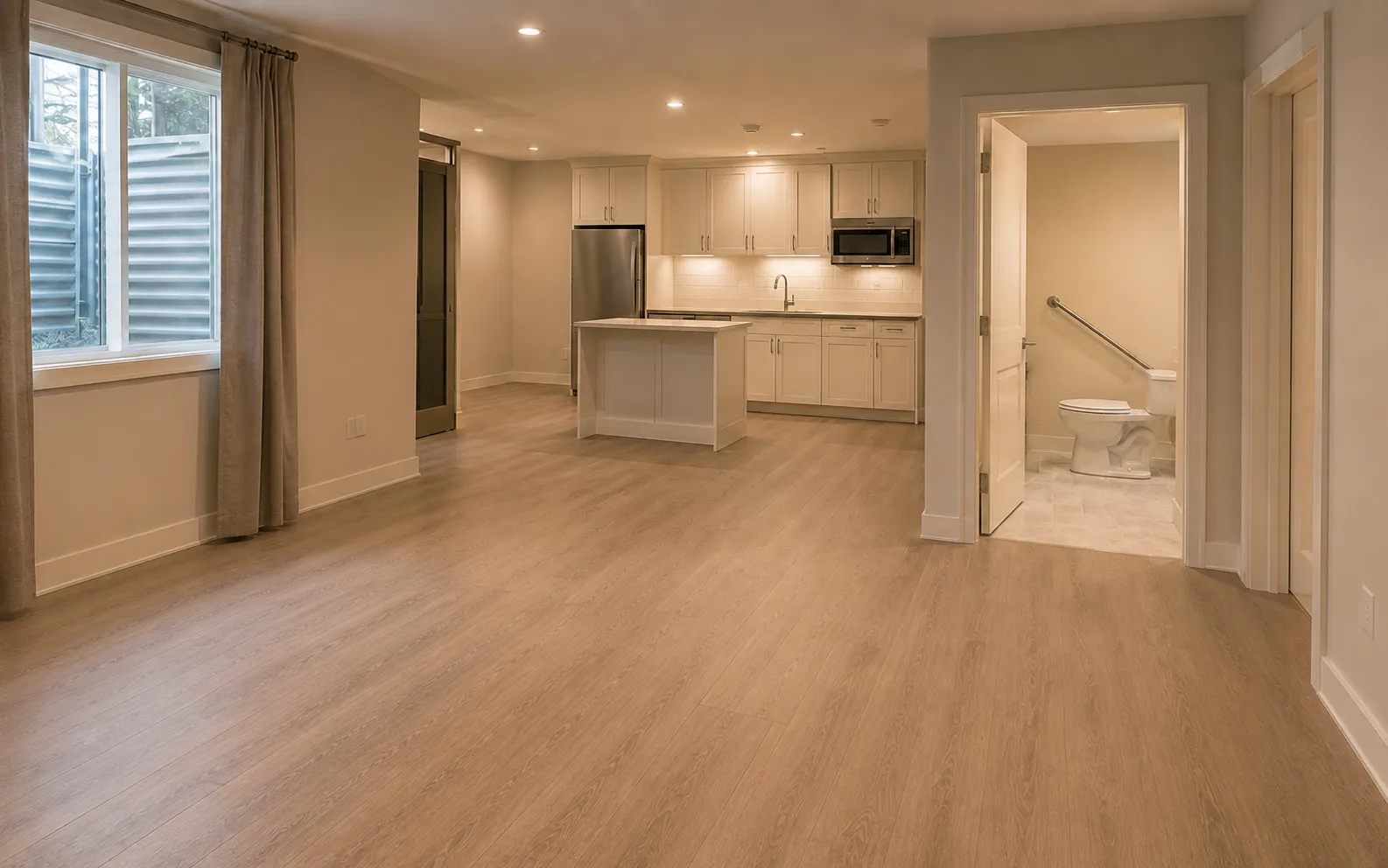
Designing a basement bathroom for an aging parent is about dignity as much as safety. Done thoughtfully, it’s a beautiful room that happens to be safe, not a clinical one. Here’s how.
Why dignity drives the design
Dignity drives the design. The aim is a bathroom a parent can use confidently and on their own, that looks like a good bathroom rather than a hospital. Every safety feature below can be done in a way that’s warm and well-finished, safety and dignity aren’t a trade-off.
That framing changes every choice. A grab bar can be a clinical chrome rail or a finished towel bar that doubles as support; a shower seat can be an institutional fold-down or a built-in tiled bench. Choosing the warmer version of each safety feature is what lets a parent feel at home rather than reminded of decline, and it’s the difference families remember.
Curbless showers and no-step entry
A curbless shower with no lip to step over is the single most important feature. It removes the most common fall risk and works whether someone is steady on their feet, using a walker, or seated on a shower bench.
In a basement this is easier to do well because the floor is being built up anyway, so the drain and slope can be planned for a flush, roll-in entry from the start. A handheld shower on a slide bar and a built-in bench make it usable seated or standing, today and years from now, one detail that adapts to whatever your parent needs.
Grab bars, lighting, and lever hardware
Grab bars (set into solid blocking, not just drywall), lever-handle taps that are easy on arthritic hands, and bright, even lighting make the room safe to use day or night. These are small details that decide whether a parent feels independent or anxious.
The non-negotiable here is the blocking behind the wall: a grab bar must carry a falling adult’s full weight, so it needs solid wood backing installed before the drywall, not an anchor screwed into hollow board. Lever handles help hands that struggle with round knobs, and a bright, shadow-free layout with a night-light path prevents the disorientation that causes night-time falls.
Non-slip flooring for wet feet
Non-slip flooring matters because basement bathroom floors get wet. The right tile or vinyl gives traction underfoot and prevents the slips that cause serious injuries in older adults.
Look for flooring with a high slip-resistance rating, and use smaller tiles in the shower so the extra grout lines add grip underfoot. Modern slip-resistant tile and luxury vinyl come in warm, attractive finishes, so you get traction without the room looking like a commercial washroom. For an older adult, this single choice meaningfully lowers the risk of the kind of fall that ends independence.
Layout for a walker or wheelchair later
Plan the layout for the future, not just today: a doorway and turning space wide enough for a walker or wheelchair, even if they’re not needed yet. Building it in now is far cheaper than rebuilding the room in a few years.
That means a wider doorway, clear floor space to turn, and a sink and toilet placed so a walker or chair can approach them. None of it has to look medical, it just reads as a generous, uncluttered bathroom. The point is that the room keeps working as your parent’s mobility changes, instead of forcing a renovation exactly when it’s hardest to manage.
What it costs to do it right
Doing it right costs a little more than a standard basement bathroom because of the larger footprint and reinforced walls, but it’s a fraction of the cost of a fall, and it’s what lets a parent keep their independence at home.
Weigh the modest premium against the alternative: a serious fall can mean a hospital stay, a loss of confidence, and sometimes the move to assisted living the family was trying to avoid. Seen that way, an accessible bathroom isn’t an upgrade, it’s the thing that lets a parent stay safely, comfortably, and proudly in their own space close to family.